







SemQL: semantics + context as code all in one language
SemQL (Semantic Query Language) is Semarchy’s proprietary, SQL-like language to deliver Intelligent Data Products that never drift or break governance policies
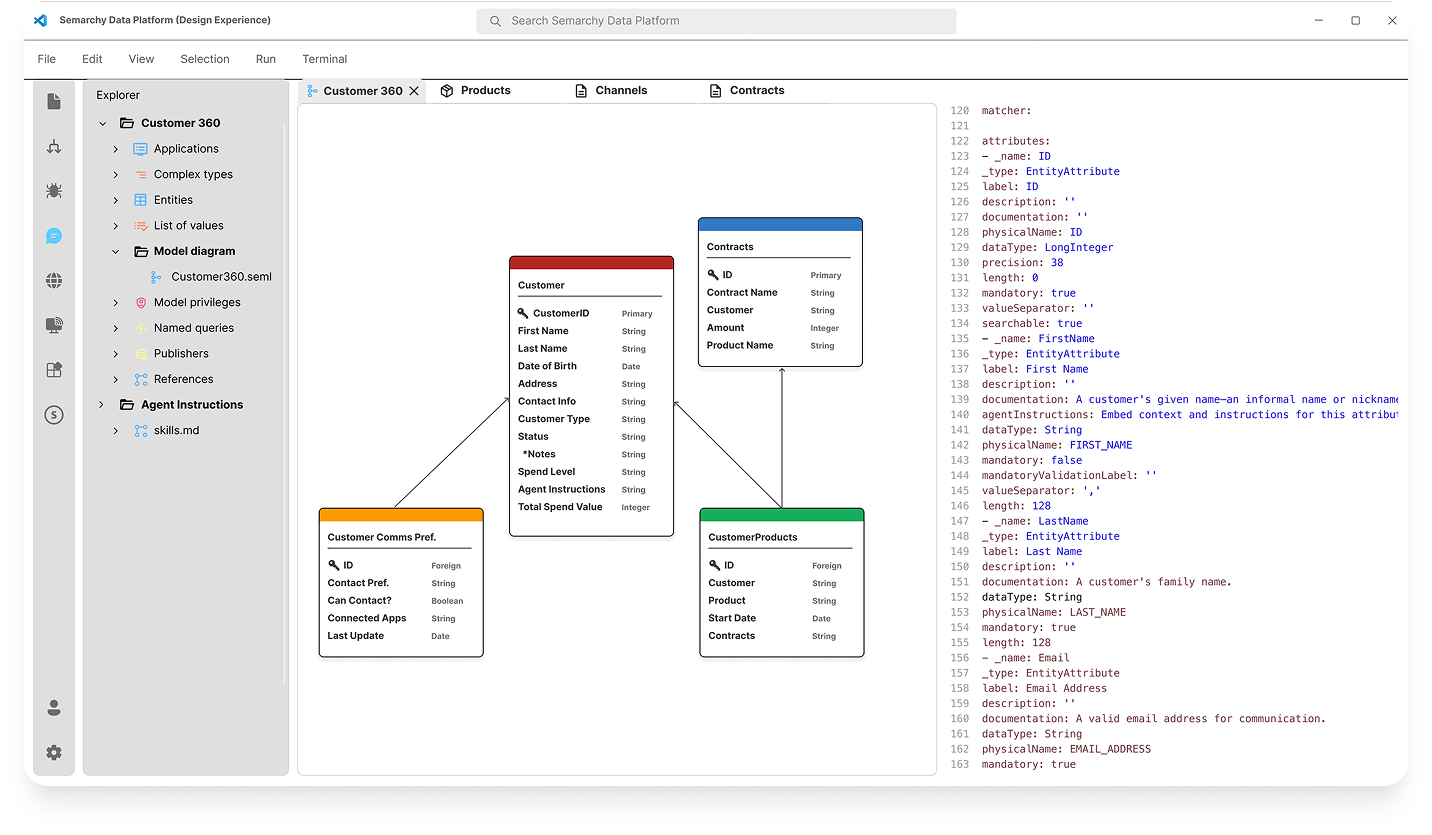
SemQL is the shared language for humans and machines
One declarative language for semantics, context, business rules and governance — authored by your devs, consumed by your teams, agents and apps.
Immediately familiar
Anyone who knows SQL can write SemQL on day one — declarative constructs, a complete function library, no 6-week ramp or specialist hires.
Multimodal and flexible
Build the way you prefer and switch mid-task: code-first, visual modeling, form-based or agentic design, granularly configurable at every level.
Governed and portable
Rules, semantics, context and access policies live in one readable, version-controlled file, enforced wherever the Data Product runs — not bolted on.
From semantic model to governed delivery, in one language
SQL-familiar syntax, visual relationship modeling, embedded context, in-database execution and governed delivery to teams, agents, and apps.

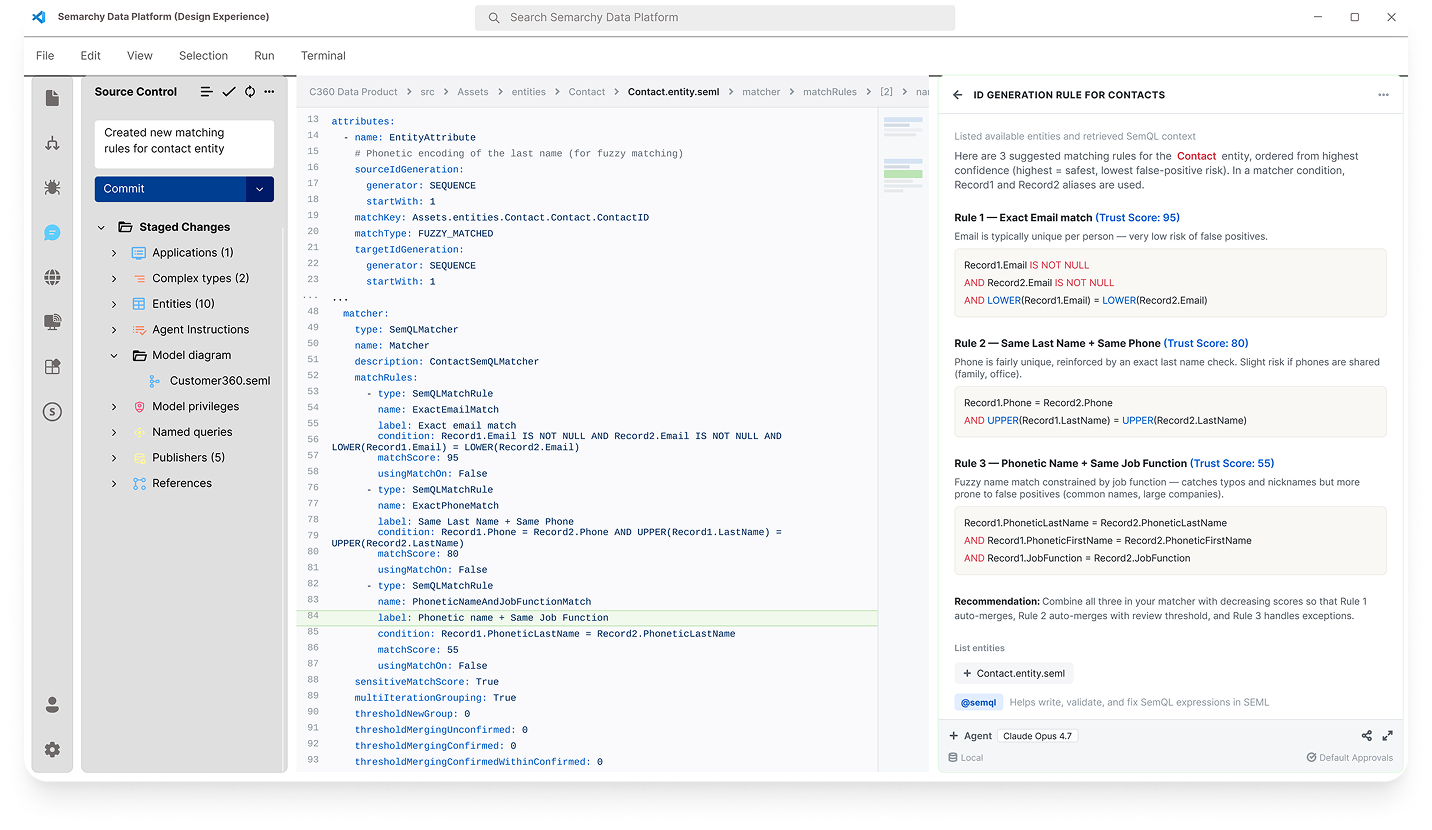
SemQL uses your team's SQL skills and our agent's skills
Build Data Products on day one with the SQL skills your teams already have and functions that map to your databases. Semy helps when you get stuck.
Familiar, SQL syntax
Declarative SQL syntax your teams know, plus a built-in library for transformations, fuzzy matching and similarity scoring mapped to native functions.
Semy by your side
Describe what you need in natural language and Semy’s custom-trained skills return valid, ready-to-use SemQL — directly in your VS Code workspace.

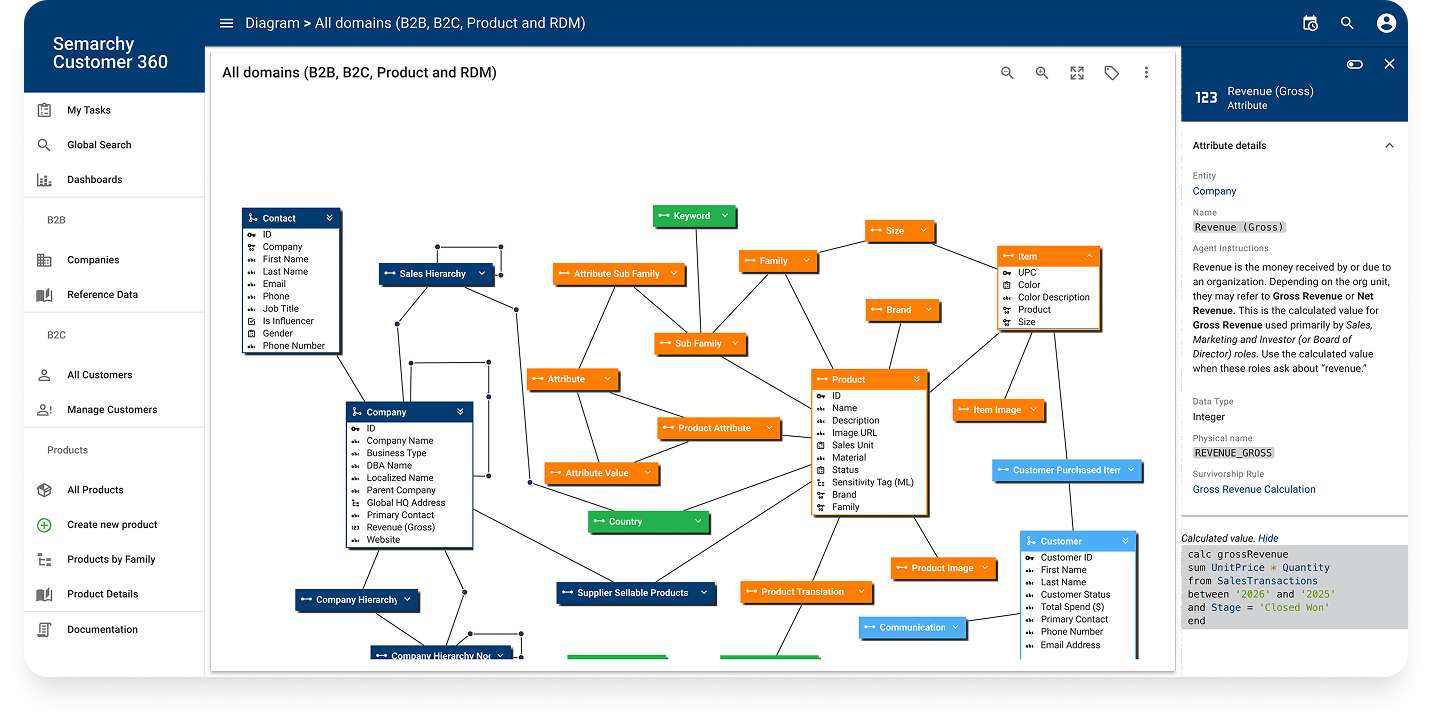
Define relationships and explore semantics visually
Model entities and relationships and generate semantic context without complex SQL joins or a graph database — then let business users explore it.
Built-in graph traversal
Define and query entity relationships readable by humans and machines without dozens of joins — a structured schema with graph-database flexibility.
Explore record semantics
Any consumer can explain a record as a graph of related entities, expanding each node down to the individual record in every Data Product’s web UI.
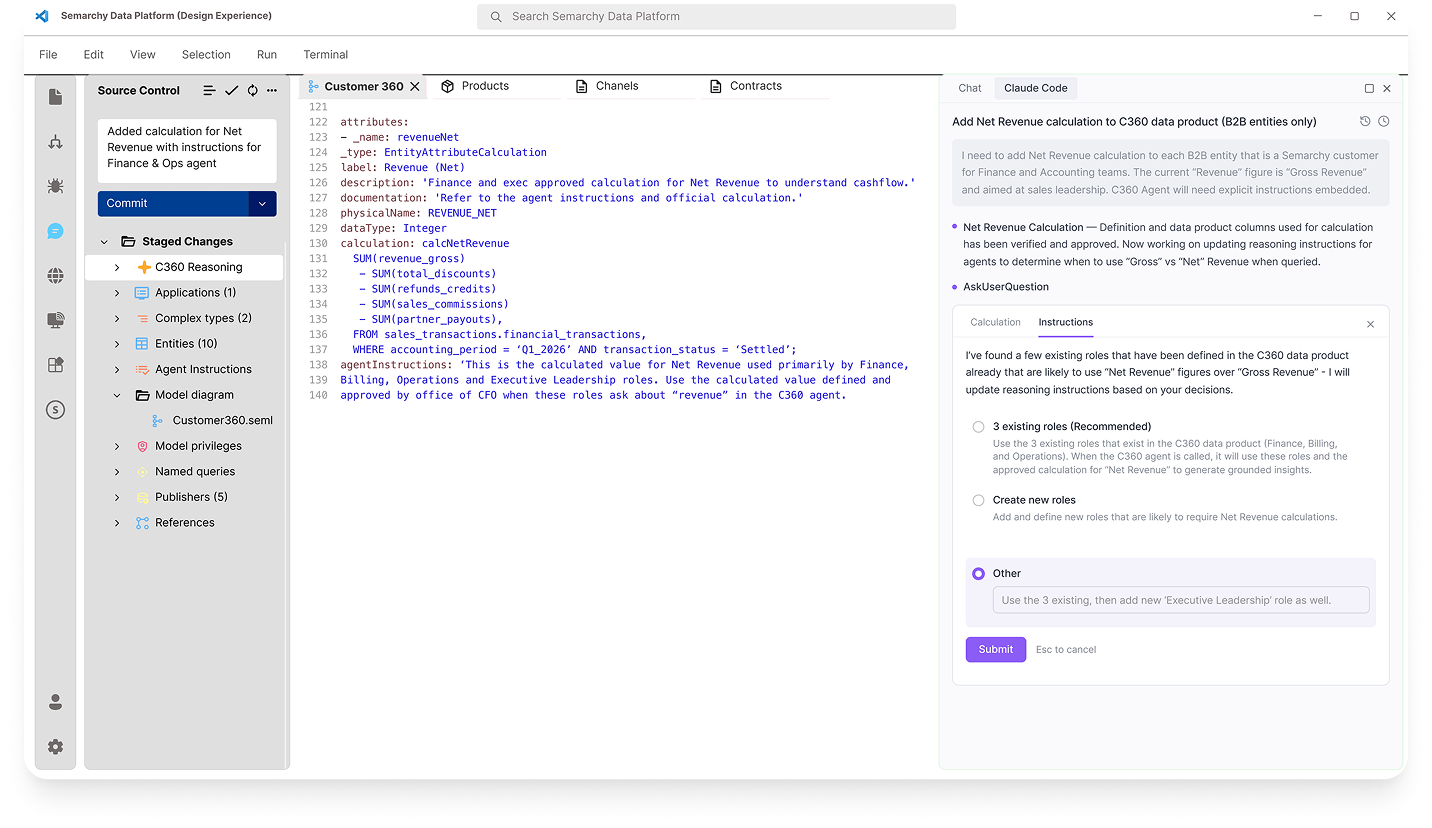
Model the business and engineer context the same way
Keep business needs, semantics and reasoning instructions together instead of scattered across tools, so answers don’t vary for teams, agents or apps.
Model business logic
Bind granular quality rules, validations, computed attributes and survivorship policies directly to entities — not to downstream transformation jobs.
Engineer context
Business definitions, semantics, reasoning instructions live in the same file, so agents inherit context they need without a catalog or extra prompts.
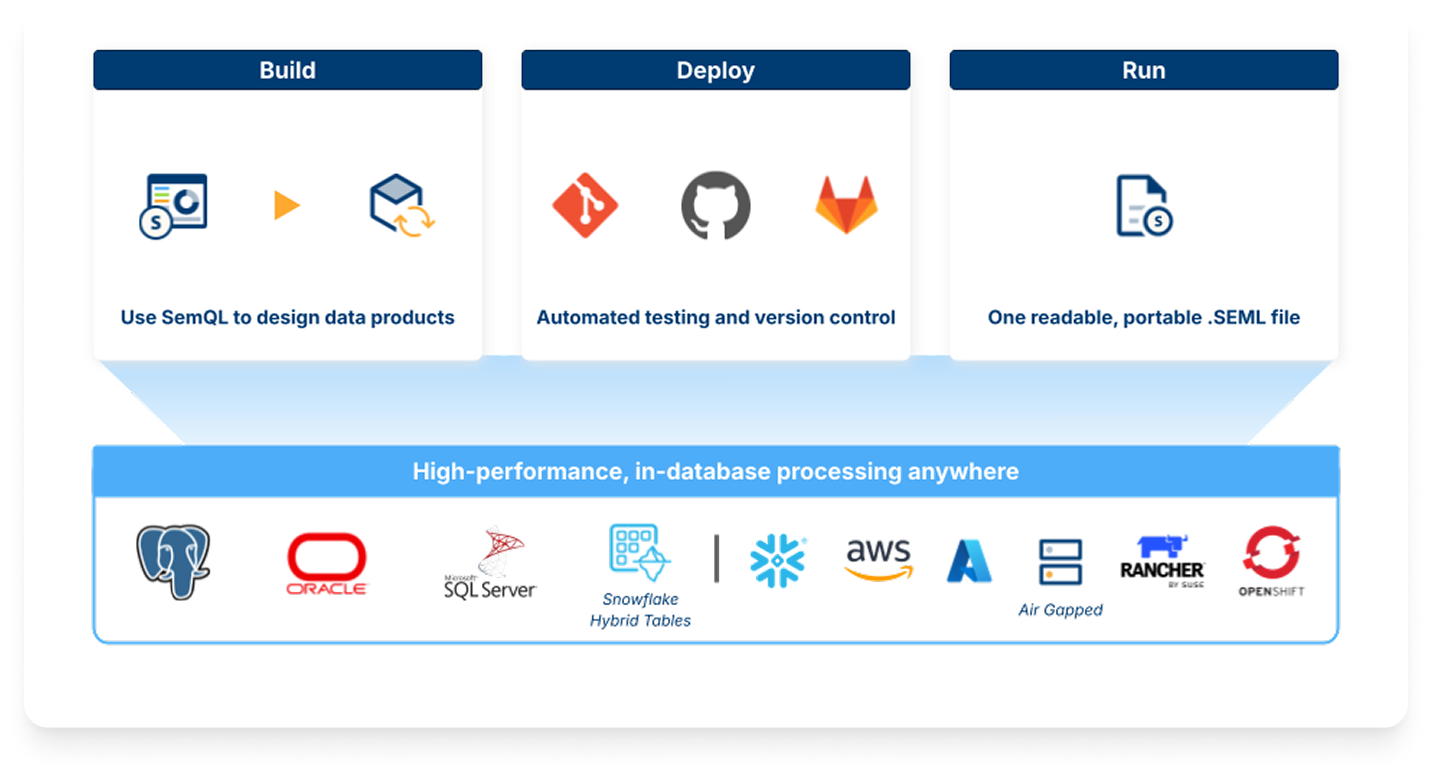
Design once, run where your data and agents live
Send the logic to the data and let the database you already pay for do the heavy lifting. Each Data Product is one readable, versioned file.
Delegated processing
SemQL compiles natively on Oracle, PostgreSQL, SQL Server and Snowflake Hybrid Tables – processed in-database for high performance and scale.
Portable and versioned
The .SEML artifact is YAML — readable by people, structured for apps and agents, versioned in Git with automated validation tests and easy rollbacks.
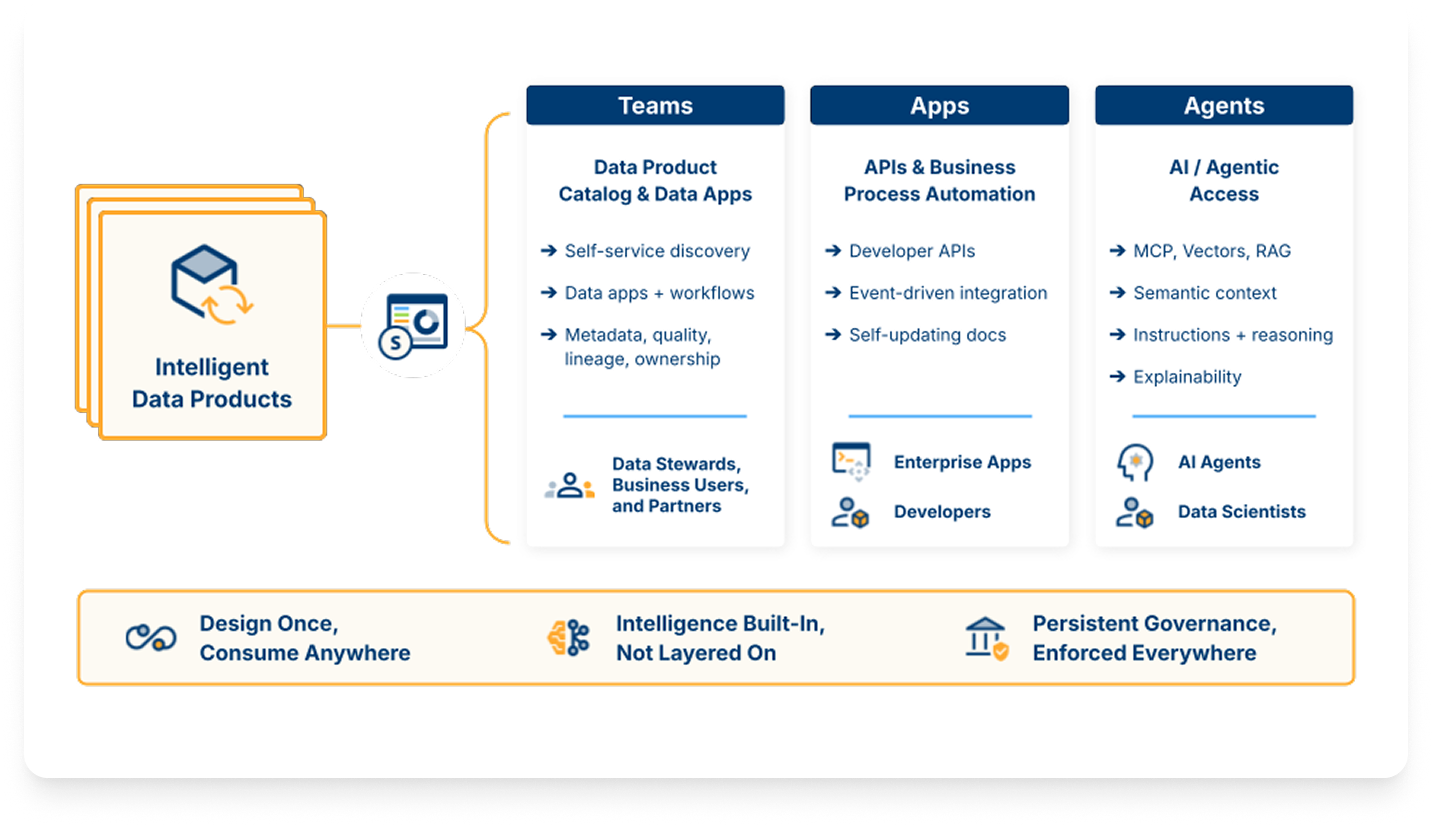
Serve every consumer with a consistent version of truth
Point your BI dashboard, CRM app and enterprise agents at the same place. Access rights and governance travels and enforced everywhere.
One truth, multi-persona
One file becomes data apps for teams, REST APIs for BI and business apps, and MCP Endpoints for agents — all resolving against the same semantics.
Persistent governance
Granular, row-level security written in the same SemQL, compiled and enforced at the data layer for every person, agent or app that consumes it.
Enterprises across industries use SemQL to model semantics, engineer context and deliver governed Data Products to their teams, agents and apps.

Hogan Le
Senior Manager, Governance and BI Systems, Chipotle
James Wilson
VP of Analytics and Enterprise Solutions, Rexel USA
Explore and learn more
From blog posts to product guides and everything in between, we’re here to help you along your data journey.